Wellspring Living


Photo Taken by Nathan Pellerin for ResKP on Unsplash
Wellspring Living’s mission to combat sex trafficking makes effective use of a variety of digital platforms to share survivor stories, research, training, community partnerships, impact data, and staff participation in statewide anti-trafficking bodies. However, an analysis of their website and social media has uncovered several opportunities to improve their outreach. This page analyzes the digital footprint of Wellspring Living and provides suggestions to enhance their engagement.
Webpage Analysis
The Wellspring Living website demonstrates the organization’s transparency and accountability through the detailed breakdown of the number of people served, class attendance, hours of therapy and case management, as well as posting their 990 tax forms. However, that info is tucked inside the downloadable impact report. By highlighting these numbers, perhaps on the donation page, instead of only the downloadable report, potential donors can get a better sense of the impact Wellspring Living has on the community.
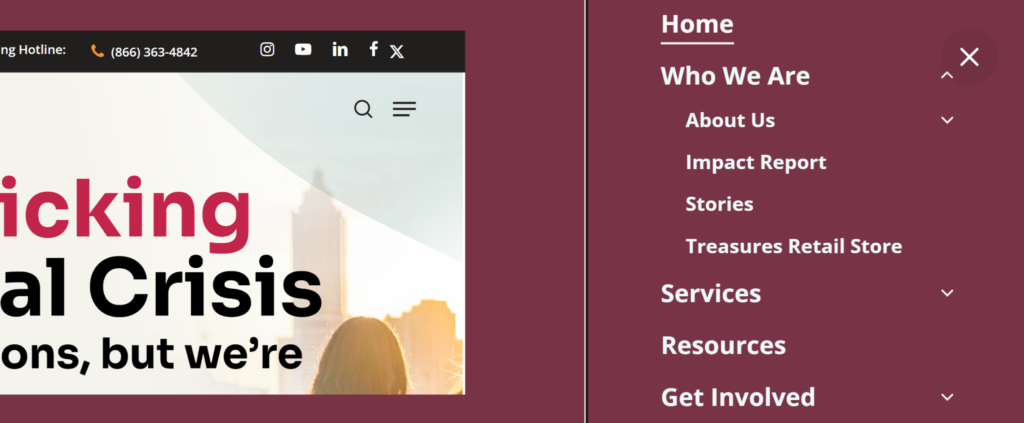
The Wellspring Living’s website visitors comprise several constituencies: sex trafficking survivors, potential donors, social service organizations, volunteers, etc. However, their website is currently organization-centric. The main menu tells visitors about Wellspring Living. If instead the website provided a path for each of the potential constituencies, it would shift the focus to who they serve, making it easier for visitors to find the information they need.
Additionally, Wellspring Living could increase engagement by reorganizing their storytelling to lead visitors from:
Here is the problem → here is what we’ve learned → here is what needs to change → here is what Wellspring is doing → here is what you can do to help change it.
Replacing the PayPal donation button with Zeffy, which does not deduct fees, would demonstrate to donors that the nonprofit makes the best use of donations.
Social Media Analysis
Wellspring Living’s social media presence helps with communicating its mission of supporting survivors of exploitation while also preventing human trafficking. Videos and posts on sites they use such as Instagram, Facebook, and YouTube educate audiences, highlight their services, share success stories, and encourage donations or volunteering. Social media’s visual format makes information accessible and shareable, while YouTube allows deeper storytelling.
Despite these positives, I notice a flaw that can lead to other problems, that being the lack of knowledge and communication being told on their process for helping people, while also not showing much of the POV of those who came looking for aid. “LeAnne’s Story” from its very own YouTube channel should be an example of the type of content they should be pushing forward. With her permission, viewers are allowed to get a viewpoint of someone whom the organization aims to help and how great it is at doing so, which helps influence viewers to chip in their own way or even help those the organization aims for come to them with their own story. Like it or not, reposted testimonials or event photos can only go so far, so pushing more of this type of content would do wonders for their goals.
Public View
Almost all reviews and opinions on Wellspring Living are positive. In 2024, one Atlanta-area news article, simply titled “Wellspring — a true blessing,” describes the need for an organization like Wellspring and lists the impacts they have made in the Atlanta community.
Faith-based organizations often receive criticism regarding their actions and priorities (see this scholarly article on common criticisms). However, when criticisms arise against Wellspring on online threads, many people advocate for the organization, like user TrWD77 who writes about how the volunteers there care deeply about helping victims get on their feet without overly pushing “Christian narratives.”
Conclusion:
Wellspring Living already has many of the elements needed for an effective digital presence. However, some essential information can be rather challenging to find, which is why it would be useful to have some improvements introduced in terms of communication techniques and methods so that the intention of Wellspring Living could be achieved.
Authors: Harlie Adcock, Sumauri Emory, Desmond Humphries, Micah Kunf, and Anne McQuade
Leave a Reply