CA1 Team 3

Photo provided by Georgia Watch
Team 3:
Ken C, Jay E, Layla N, Emma H
With the current Georgia session under way, a major topic of conversation has been data centers. Data centers have popped up all across the state of Georgia. While the exact number of these structures is unknown, there is an estimated 100 and 200 data centers in Georgia. As the data center industry expands throughout the state, concerns have been raised about the impact on an economic, environmental, and political level. Public concern for environmental issues, rising utility rates, and how data centers affect the communities around them has grown, so GA legislators are now trying to address these topics. With bills like HB 1012 (a proposal to stop the expansion of data centers) and HB 1063 (protects Georgians from financial burdens due to data centers), there has been a lot of online discourse.
When looking into these sources, first it is important to fully understand what data centers are. Data centers are facilities that contain large amounts of IT infrastructure. They store and process through data information as well as send out data for companies. Data centers are a unique and lucrative industry because they are necessary for the sustained development of the tech industry. Once data centers are built, they require little input from humans. Large data centers generally have a staff of 35, while smaller ones may only have a staff of 8. Operation costs are relatively low, and income from data centers can be substantial. Those who are pro-data center often point to this to justify continued support. However, data centers require substantial allocation of resources like water, power, and space.
Data centers are large structures that require a lot of power. How much? That can depend on the size. According to Solar Tech, data centers can consume anywhere from 1-650 mW continuously. Data centers also require cooling, with many centers requiring large amounts of water. Beyond necessities associated with data center operations, costs associated with standard operations for campuses of similar scale are present, including light pollution, air pollution, increased traffic, and infrastructural changes. Ultimately, complexities surrounding zoning laws, tax breaks, and legislation will determine the benefit or cost to the surrounding communities that house data centers.
In this tweet, a local Georgian shares a video of what it is like for a family living near a data center. Some of the biggest concerns around the increase of data centers is the lack of water and poor water quality due to these facilities’ usage. The family shares how weak their water pressure has gotten, along with how dirty their water is due to a data center being so close to their home. Georgia HB 1012 proposes a pause in data center productions to allocate time for the government to address these types of issues. It would allow them to look more into the environmental impact, utility usage, and the effects data centers have on their communities. This pause would be until March of 2027 and pause many on-going projects. As of March 6th, 2026, this bill has not yet been passed and as we reach Crossover Day, meaning this bill will most likely be forgotten.
This tweet is of a local Georgia resident expressing concern about their Georgia Power bill relating to the upsurge of data centers. There is a lot of online discourse regarding the topic of how data centers affect the communities around them. One main argument is that the expansion of data centers in Georgia are causing utility bills to go up for residents and small businesses. In this tweet, the poster claims it is data centers that have caused the rise in bills while others in the comments disagree. Others believe it is other non-related elements causing this spike. HB 1063 would help with this potential issue. This bill would prevent electric utility companies from raising costs specifically from data centers’ large utility usage. It would require data centers of 100 megawatts or greater to cover their own costs. This would help by potentially relieving Georgia residents of spiked or increased rates.
Bill limiting data center costs from being passed on to residents clears Georgia House
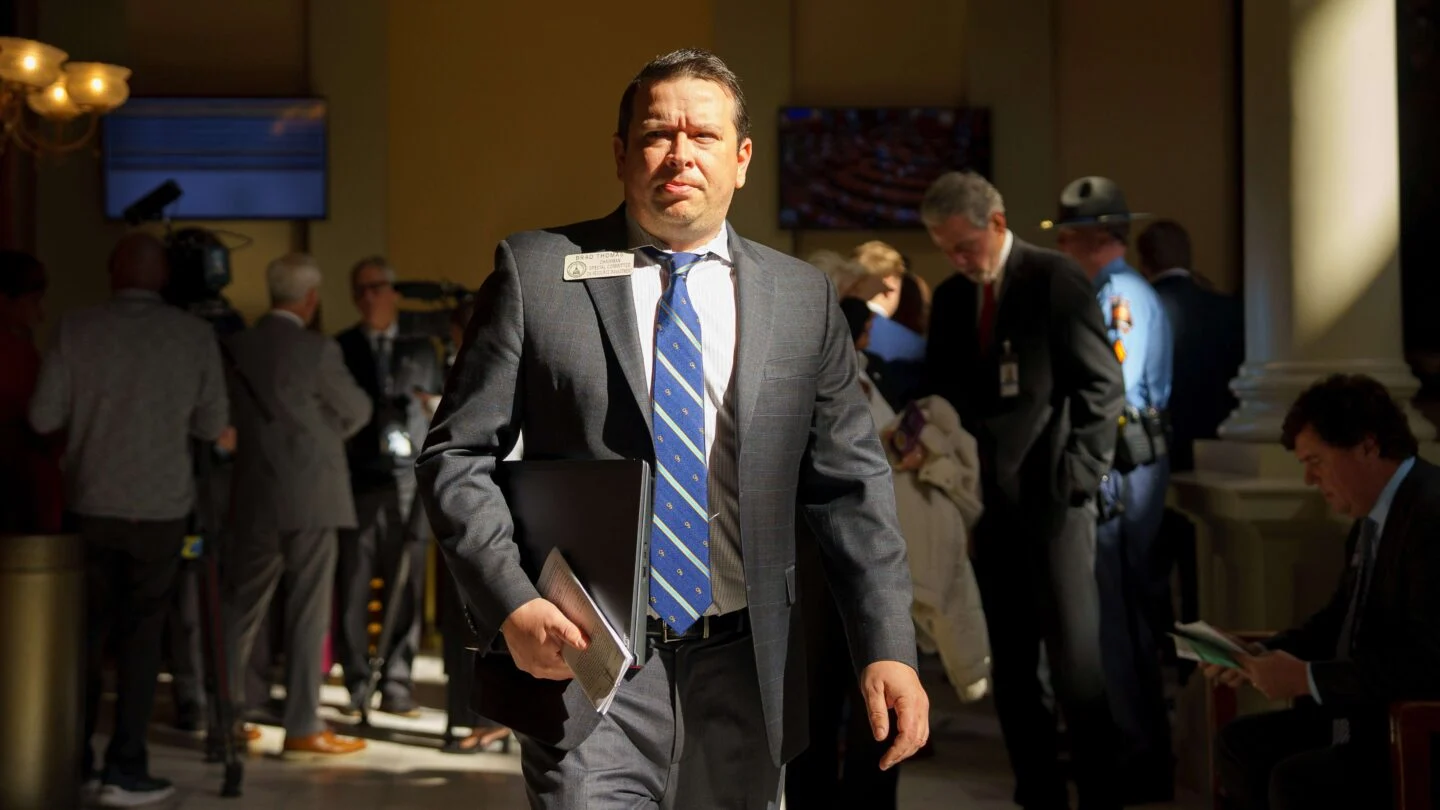
This article dives into the details regarding HB 1063. This bill would help prevent residents as well as small businesses from being affected by data centers. With data centers being a big topic of conversation in the current Georgia session, it’s important to look at how the expansion of data centers affects Georgians. With many people concerned about the effect of data centers on their utility bills, the Georgia house has approved HB 1063. It would create a required contract between electrical companies and data centers that would prevent the cost of data centers from spiking resident’s electrical bills. This article also outlines potential critiques of this bill as state Rep. Ruwa Romman from Duluth states, “It adds no additional protections for consumers and no cost cutting mechanisms”. People are concerned that these contracts won’t be specific enough to restrict companies from increasing rates based on data centers’ high usages.
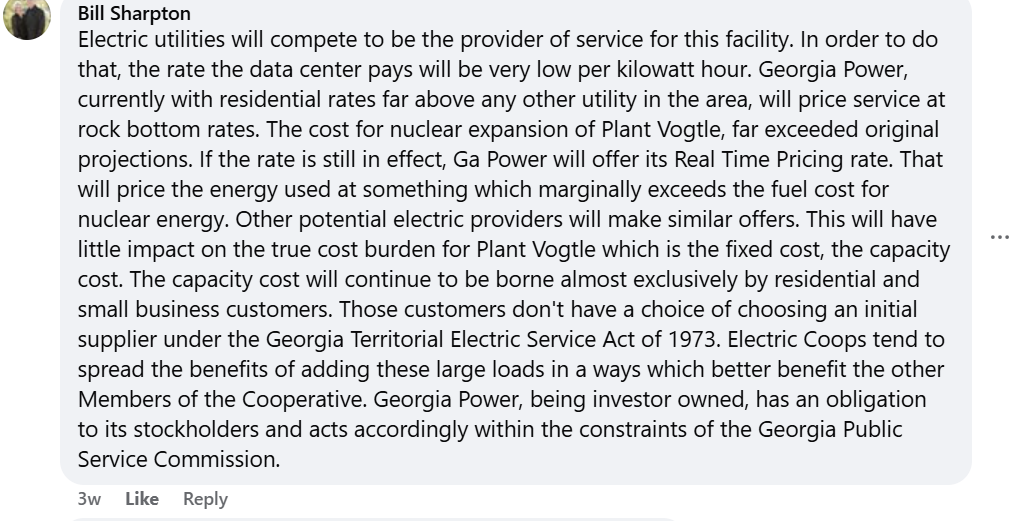
Georgia residents discuss the plans for future construction of a data center in a formerly residential area in Paulding County. Atlanta Resident Bill Sharpton comments underneath a post by Paulding County Uncensored, a forum for discussions of all things Paulding, analyzing the data center discourse from an economical perspective. Residents of the state of Georgia generally use one electrical provider that is publicly regulated. Residents generally do not have the ability to choose their power provider, as this is determined by zoning maps. For those purchasing power for commercial use, any projects exceeding a load of 990kW may select their energy provider out of those operating in the area. Sharpton points out that, as the data centers are being built, local energy providers will compete to provide the lowest rates. Ergo, companies are incentivized to keep lower rates for Data Centers. Many electrical companies utilize real time pricing, which is a way of calculating power rates based on the cost of generating and supplying energy to the consumer, typically by the hour. These costs reflect the changes in supply and demand: when demand goes up, rates go up with it. Data centers wind up consuming large amounts of energy over a long period of time, which increases the real time price of power. This leaves the consumer to foot the costs of extended data center operation, as customers’ purchasing power for non-commercial purposes do not have access to the competitive market. This then causes consumer bills to skyrocket.
Georgia resident Camie quote tweets WABE reporter Rahul Bali on his post regarding the passage of HB 1063. Camie affirms the decision of state representatives to pass HB 1063 onto the state senate, citing concern over the construction of data centers within his community. He also refers to concerns that have been raised by other residents, which have been ignored by local officials. Reflected in this post is a sentiment that can be found throughout much of the discourse surrounding data centers in Georgia: many people feel unheard by their representatives. With the often hasty construction of data centers across several communities, discrepancies with zoning, tax breaks, and liberties granted in regards to energy consumption, many residents do not feel protected by legislation. As Camie states, the passage of HB 1063 (a bill aimed at protecting consumers from footing the bill for data center energy costs) in the House is a step in the right direction for the state of Georgia and protections regarding data centers.
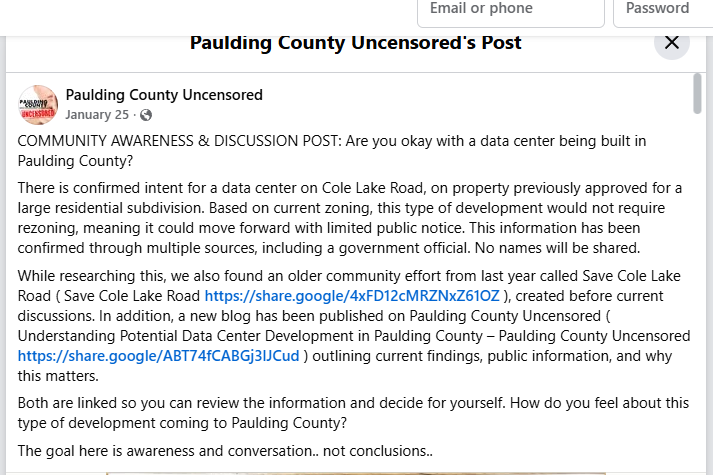
This post by Paulding County Uncensored, a discussion board dedicated to all things Paulding County, offers space for discourse surrounding the new plans for a data center to be built in a residential area of Paulding County. The post also reveals information regarding zoning. A major point of contention regarding the data center is that it would be taking the place of what was originally planned to be a housing subdivision. The land where it will be built was zoned for residential use, and will not be rezoned prior to development. This raises questions as to the local government’s involvement with this new construction. Zoning in Paulding County serves the purpose of mapping the projected impacts of the development on the local community and environment. An interesting detail considering the current discourse surrounding the impacts of data centers on the local community. Also linked in the post is the website of a community that began to speak up about the issue, inciting a movement called “Save Cole Lake Road”. Further down in the post we see a website linked that discusses other details on the expansion of data centers. The website also continues on to answer the question what is a data center. The post suggests that the reader should be aware of the potential developments in the area and consider the effects that large infrastructure projects may have on the environment, housing plans, and growth in the area.
This tweet by Georgia Freedom Caucus professes outrage surrounding the news of data centers taking money from Georgia citizens. In this tweet, the author claims that electrical fees should be paid by the data center themselves. This tweet also introduces Senate Bill 34, which prohibits power companies from taking money from regular households or small businesses and using the funds to pay for any extra electricity costs that are being put towards huge data centers. Many people in the comments of the tweet are discussing experiences they’ve had in which their bills increase significantly because of the rising utility bills. Upon bringing forth the Senate Bill 34, Georgia Freedom Caucus advises that we turn to our legislation to hold data centers accountable for taking money from Georgians. Data centers often take up huge amounts of electricity to power servers, for cooling systems, and other equipment that helps with the process of storing and processing information. The tweet brings attention to some concerns about protecting consumers and making sure that large data centers are held financially accountable for their energy funds. It also encourages citizens to stay aware of what’s going on in their communities, express concerns to governors and legislations, and support legislation that prioritizes justice and transparency in energy costs.
The article discusses the alarming spread of data centers, and how Georgia taxpayers are raising concerns to their representatives. As Georgia is being considered as a profitable market for these data centers, the pressure is on for state lawmakers to take action and set restrictions on these large tech companies to prevent taxpayers from being negatively impacted by these centers. Some of the most discussed issues involve tax breaks, affordability on utilities in residential areas that may be near these data centers, and transparency on resource usage. Since January 27 of this year, seven bills that claim to tackle these issues have been introduced. With Crossover Day having already been passed, the majority of these bills have not yet progressed past 25%, and with only SB 410 being engrossed at 50%. The chance of more than one of these bills being passed is uncertain, despite residential consumers’ concerns.
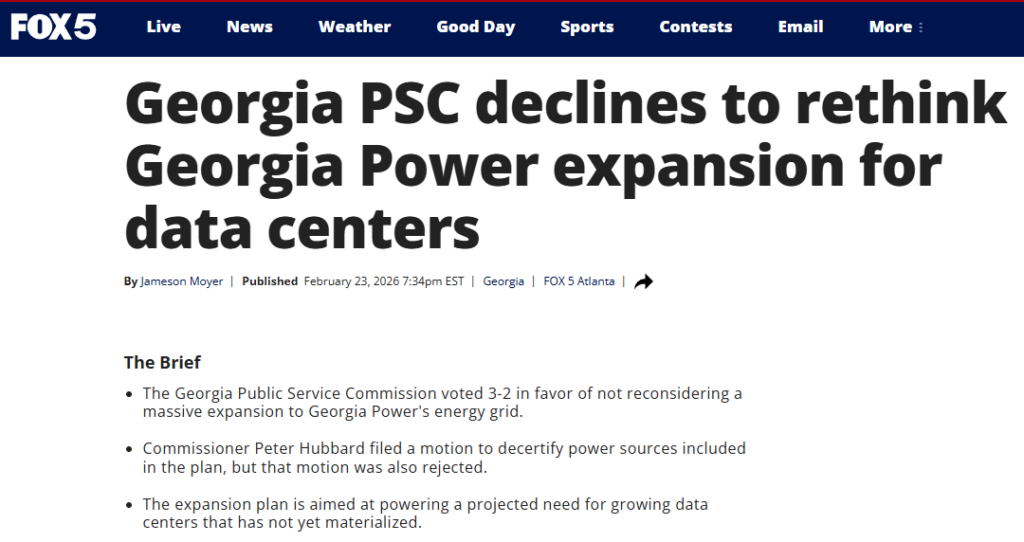
The following article explains that the Georgia Service Commission rejected a proposal to reconsider Georgia Power’s grid expansion. The expansion was originally planned to help meet the electricity demand for homes and residential areas all throughout the state, however the decision was changed to instead help accommodate for the potential mass influx of data centers that are expected to be built in the state over the next few years. Coincidentally, the initial proposal of this grid expansion was approved a month before two out of five of the PSC’s seats officially turned over at the beginning of January this year. Current Georgia Public Service Commissioner, Peter Hubbard, was who initially proposed the motion to have the planned expansion reconsidered, which was rejected with a 3-2 vote against reconsideration. Georgia Power stated that the grid expansion aiding upcoming data centers will help its customers save money long-term, even if the demand for these data centers falls short. The main concern with the current lack of demand for these centers is that residents are already seeing their bill rates rapidly increasing. Since Georgia Power is the only electrical company in the majority of the state, we may see residents voicing their concerns more, especially with the lack of trust that seems to be prevalent.
This post discusses how there is an issue with state legislators voting and advocating for data centers, when they supposedly do not know about the AI programs that these data centers use and run. The author of this post explains how he has talked in-person with these legislators who do not even know about some of the most well-known AI programs, examples such as Gemini or ChatGPT. This statement highlights a large issue that exposes these state politicians not doing their research or looking into the policies that they vote on and even advocate to the public. The result of these actions lead to raised concerns from Georgia residents towards their representatives. Making sure state representatives have trust from their constituents is crucial, as losing that trust could mean losing their job. This component is especially vital for these politicians with the mid-term election taking place later this year, making this assembly session a critical time for legislators that are looking to get re-elected.
In this generation, changes are happening rapidly. We can either learn to adapt or allow it to take over us. Ai is a very powerful and helpful resource given to us, but we shouldn’t have to give up our very own resources to coincide with it. Data centers are only going to continue to grow and as a society we must make sure they are not taking our very own resources. Data centers are continuing to grow and spread, and as this is happening, Georgians are being taxed for their usage and expansion. Whether or not this is a fair choice is being discussed everywhere by Georgia’s citizens.
We are also seeing residents becoming more concerned with state legislators agreeing on bills and plans that have not fully been looked through, regardless if residents agree with these bills or not. Bills regarding data centers will allow them to still be built, but the answer to if they will be given proper regulations to keep large tech companies transparent to the public and prioritize affordability for consumers is still uncertain. With Georgians already seeing their utility rates increasing, taxpayers are taking initiative to make sure people impacted by these issues are informed on bills and concurrent news as the current Georgia General Assembly Session progresses with limited time left.