CA2 Team 4


.jpg)
CA2: Team 4(Mekaylah N., Sarah S., Leon P., Joseph V.)
Proposals to change state tax policies often create debates because of their potential effects on government revenue, public services, and especially economic growth. Georgia has recently passed two pieces of legislation, Georgia Senate Bill 476 and Georgia Senate Bill 477, which have both sparked debate about the consequences of large tax reductions. These bills propose major cuts to both corporate and personal income taxes in Georgia, including lowering the state income tax rate and expanding deductions. Supporters argue that reducing taxes could stimulate economic growth and help families and businesses keep more of what they earn. Sceptics, however, warn that these reductions could significantly reduce state revenue and lead to budget deficits that would affect funding for services such as healthcare, education, and infrastructure.
Debates over tax reductions are not unique to Georgia. Similar discussions are underway in other states, such as North Carolina, where lawmakers have proposed gradual reductions in the state income tax rate. Josh Stein warned that continuing these cuts could cause “a $2.8 billion to $3.5 billion budget shortfall,” which could cause reductions in important public services. Stein continued to warn that aggressive tax reductions could weaken the state’s financial stability: “We are making ourselves a poor state by reckless, pre-programmed tax cuts.” These ongoing debates show a broader national conversation over whether lowering taxes strengthens state economies or reduces the funding necessary to maintain essential public programs.
In this bill analysis by Daniel Kanso of the Georgia Budget and Policy Institute, he examines the potential impacts of SB 476 and SB 477, which propose major reductions to Georgia’s corporate and personal income taxes. Kanso argues that these bills could substantially reduce state revenue and create significant budget deficits while primarily benefiting high-income households.
The analysis explains that income taxes are Georgia’s largest source of revenue, creating nearly $19.5 billion for the state’s general fund. This legislation would lower the personal income tax rate from 5.19% to 3.99%, reduce the corporate tax rate to 4.99%, and increase the standard deduction. According to Kanso’s analysis, these changes could eliminate about half of the state’s income tax revenue if fully implemented. “An annual budget deficit greater than $7.7 billion.”
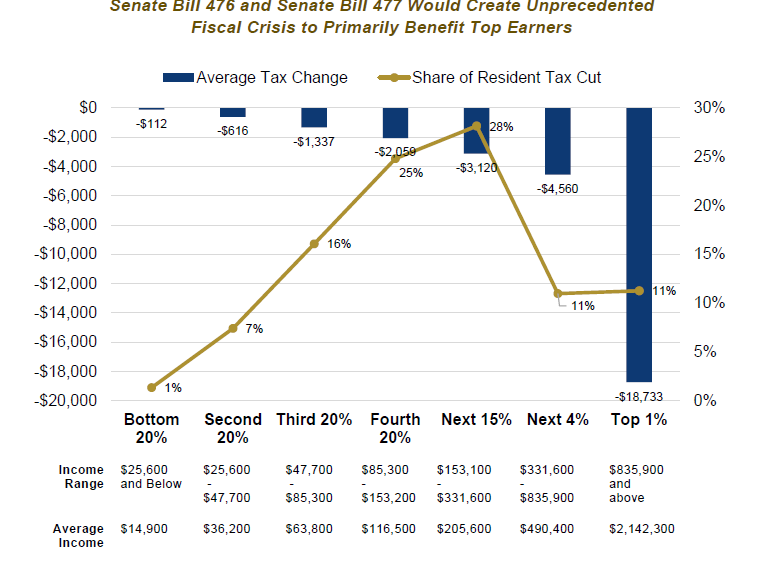
A chart in the article shows how the benefits of these tax cuts would be stretched across various income groups. The graph shows that higher-income households would gain the largest savings on their taxes. As an example, the top 1% of earners (making more than $836,900 annually) would get an average tax cut of $18,733, with the bottom 20% only receiving about $112. Kanso argues that policies like these “cut Georgia’s income tax from the top down,” meaning higher earners receive the largest financial benefits. Kanso concludes that these bills could reduce funding for health care and education programs while pushing the benefits of tax cuts toward the top 1%.

In this article, Kate Schubel discusses the debate over income tax cuts in North Carolina and how they could impact the state’s public services and budget. Under the current law, the state’s flat income tax rate is 3.99% in 2026, with automatic reductions scheduled to 3.49% in 2027 and 2.99% in 2028 if revenue targets are met. Josh Stein and some lawmakers argue that continuing these cuts could cause a serious budget gap. Stein warned states could get “a $2.8 billion to $3.5 billion budget shortfall,” which could cause cuts to services like healthcare, education, and public safety.
The article also shows that the financial benefits of the tax cuts would vary widely by income level. State projections show households earning over $764,000 could save about $8,095 annually, while households earning under $21,000 would save only about $1. Stein again warns that “we are making ourselves a poor state by reckless, pre-programmed tax cuts.”
This debate is similar to debates about Georgia SB 476 and SB 47. In both states, critics argue that major tax reductions could lower funding for public services and benefit wealthy households disproportionately. However, the supporters in both legislatures claim that lowering these taxes supports economic growth and helps working families keep the majority of their income.

North Carolina Legislators are trying to remove the property tax cap that helps protect property taxes from escalating amidst value increases. If removed, it would mainly affect the disabled, the veterans, and the senior citizens of the state. Attached to this post are many comments expressing distaste for the change. One person even mentioned that they moved from Virginia to retire in North Carolina because of the property tax cap. If Georgia were to adopt a similar rule, it would need to be noted that removing tax laws that benefit individual citizens and small businesses would lead to a similar adverse reaction.
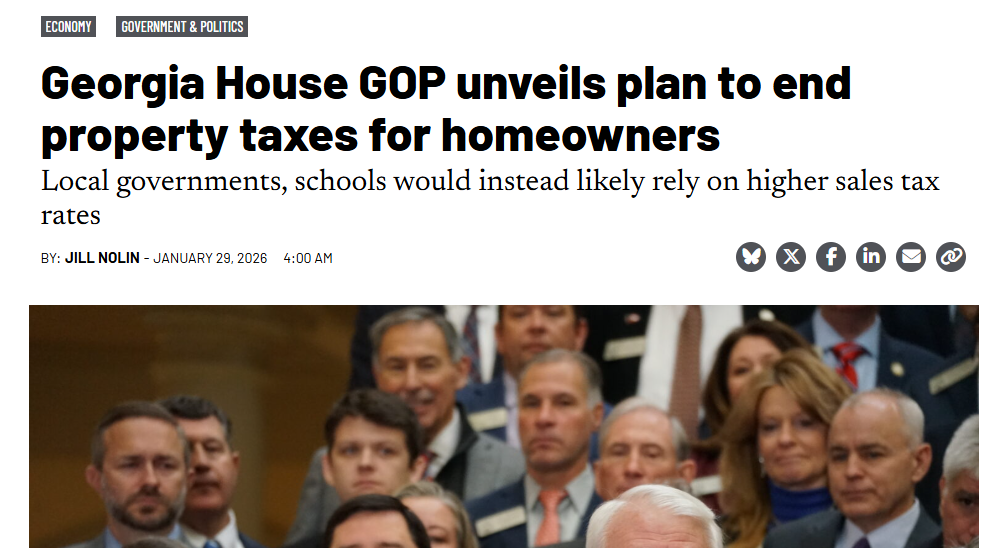
SB 33 passed in the 2026 Georgia legislative session, and works to provide a property tax decrease at the cost of a sales tax increase. The stakeholder comments on a post by WABE that announced the passing of the bill that prevents counties from opting out of the homestead tax exemption program. The stakeholder refers to Republicans as being pro-local government, yet they are enforcing laws that give the local governments less of a choice in enforcing state law. Between the previous artifact, which emphasizes how pleased North Carolina residents are with property tax caps, and this artifact, which outlines the possible opposition to the enforcement of property tax caps, it is clear that the biggest obstacle of enforcing fair property tax is the inflation that makes it problematic in the first place.

This stakeholder discusses how GA state Bill 476 could negatively impact GA incentives as a whole, and how that can affect the foundations and infrastructure of the state; the entirety of the foundation of the GA economy is in danger. Going into more things and quotes things from debates as what is specially getting harmed getting into things like Georgia healthcare, Veteran and law enforcement how their credits will be taken then even as will getting into to how this will make a difference in child care and lastly housing credits this will truly effect not the high class but effect the working class on the necessities that they need all around to live their day to day.
“This bill wipes out nearly every tax credit that keeps GA economy running.”
– Anitra Favors
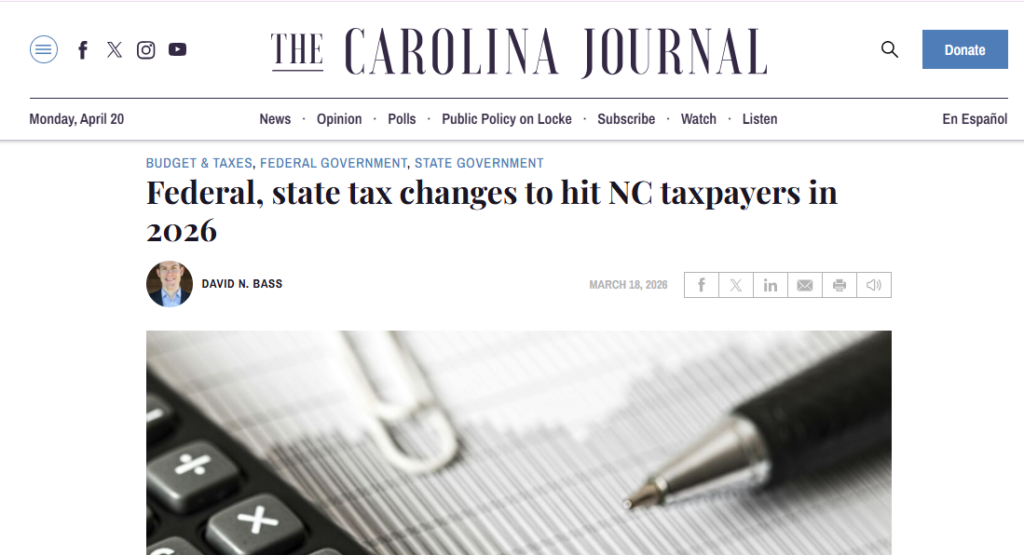
This article goes into how NC Federal and state taxes will be impacted by things like overtime pay and how that will be exempted from federal tax. Then also how it affected tips in how it won’t take from tips until 25,000$. Then senior citizens will also have an additional deduction and overall lightening the burden on taxpayers also deducting the flat income tax rate from 4.25% to 3.99% . This goes in comparison to GA SB 476 & 477 regarding the overall deduction as a state, then going into aiming to reduce income tax rates and alter various tax credits and exemptions.
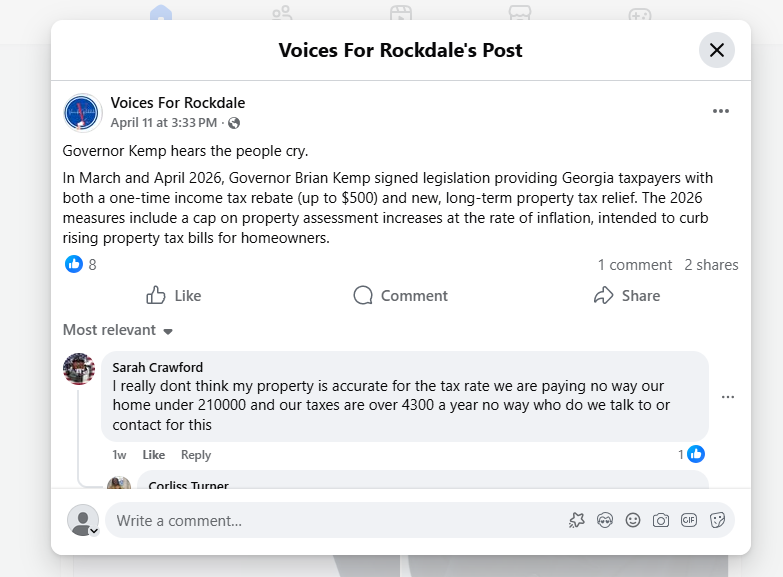
This post from the Voices For Rockdale County explains that GA Governor Brian Kemp signed legislation for giving a refund or reduction to taxpayers based on what they owe. The refund or reduction can be up to $500. Kemp will also be providing “long-term relief” to taxpayers. Property assessment will increase at the same rate of inflation in attempts to alleviate stress on homeowners for tax bills. In comparison, according to NC NewsLine, North Carolina now has the approval to limit property taxes. The N.C. Association of County Commissioners has also made a proposal that low-income homeowners, disabled, and older people be allowed to postpone their taxes.
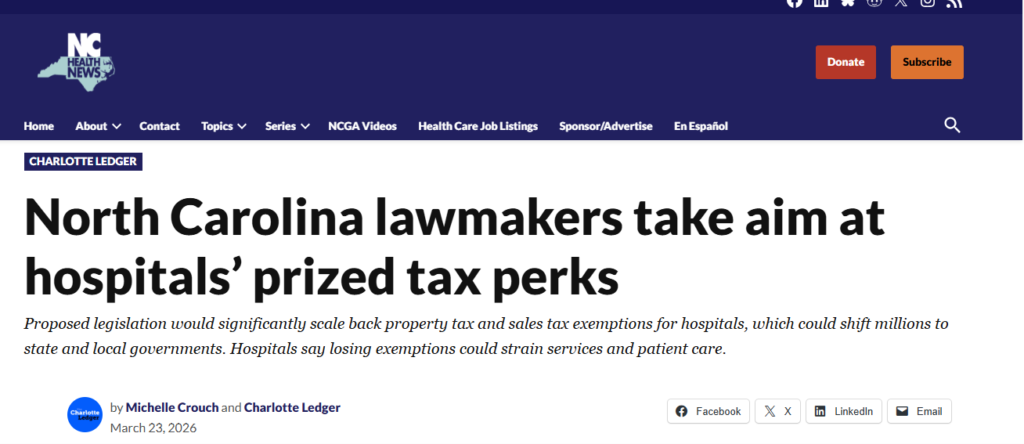
This article from North Carolina Health News talks about North Carolina lawmakers lowering tax breaks in hospitals to reduce the burden of taxes on taxpayers. As of right now, hospitals are exempt from paying taxes but lawmakers plan to cut that exemption to 50 percent. Hospitals’ concerns lie within patients’ ability to have access to health services. In contrast to this, hospitals have been able to expand with more doctors’ offices and clinics, which local governments complain that they’ve been missing out on profits because of the tax exemptions.
Since Georgia has passed Senate bills 476 and 477, there has been a lot of talk about how tax reductions will benefit taxpayers and hurt local governments. When comparing tax legislation in North Carolina it’s seen that lawmakers are also lowering taxes for their taxpayers. They’ve even gone as far to postpone taxes for the elderly, disabled, and low-income households. However, lawmakers argue that this is holding the state back from making profits, supporting Josh Stein’s claim that states are making themselves poor by establishing tax cuts. North Carolina lawmakers also argue that governments have been missing out on profits. The dissatisfaction from Georgia and North Carolina lawmakers supports Josh Stein’s claim that states are making themselves poor by establishing tax cuts.
On the other side of the debate, people believe the tax reductions will aid in economic growth, along with helping low-income families and elderly. Although these bills have already been passed, debates on whether tax deductions and exemptions are beneficial to the economy will recur.
Leave a Reply