Voting Laws State Comparison, Californias STV & Georgias HB369

HB369 is a bill that proposes to make District Attorney elections in five metro Atlanta counties non-partisan. The bill, which is republican backed, targets Fulton, DeKalb, Cobb, Gwinnett, and Clayton counties, all of which currently have democratic DAs. The bill passed all legislation in this current session and is waiting to be approved or vetoed by Governor Kemp. Previously, we discussed the motivators and possible implications of voter turnout and representation of this bill; this time, we will be comparing the use of non-partisan elections in these counties to the non-partisan primaries in California. The state has used a top-two nonpartisan primary system since 2012, and has seen increased voter turnout and electoral competition, in a way that many critics believe is empowering to voters. This makes for a very interesting contrast, since the use of non-partisan elections in these five Georgia counties is largely attributed to Republican candidates trying to get an advantage in elections. Thus, a similar approach is used for very different reasons.
In the following paragraphs, we break down artifacts from politicians, journalists, and stakeholders to better understand the history of the top-two non-partisan primaries in California, and the ways in which it has changed state-level elections for (what most residents consider to be) better, the trajectory and purpose of HB369, and how the two approaches to non-partisan elections compare to each other. We also take a look at how these reforms have sparked different conversations in both states, how republicans have justified this bill in Georgia, and ways that Georgia residents can take a stance on the bill and get more involved with state politics.
Which bills did the Georgia Legislature ultimately pass on Sine Die?
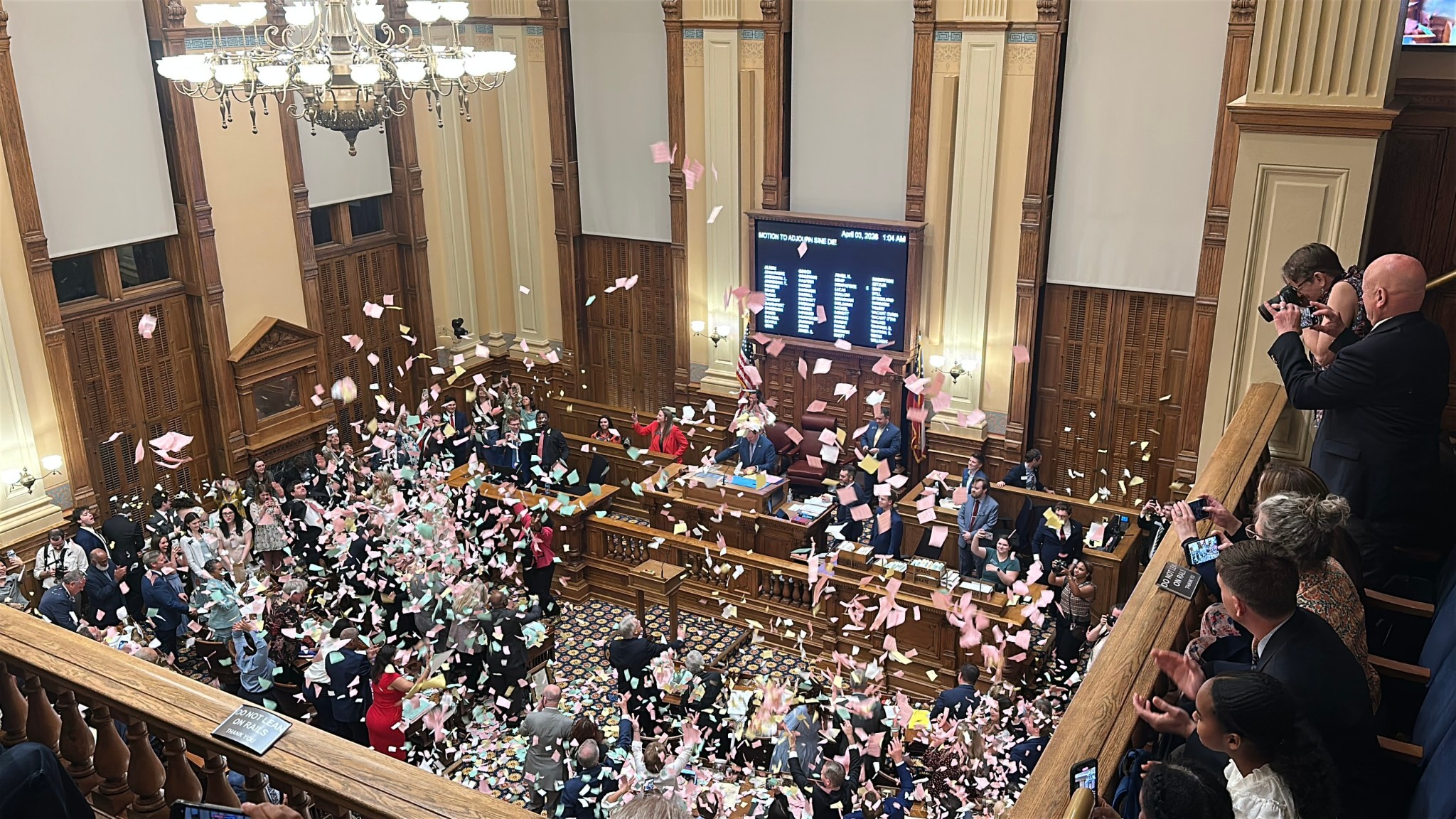
This Atlanta Civic Circle article by Alessandro Marazzi Sassoon goes over the last few bills that passed legislation during this session on Sine Day, April 2nd. Among those is SB443, a republican backed bill sponsored by Senator Carden Summers (13th District, R) that aims to increase charges and penalties for obstructing roadways, usually in regards to protestors; HB295 a republican backed bill sponsored by Representative Houston Gaines (120th District, R) which allows affected property owners to sue local governments for compensation if they fail to enforce anti-homelessness laws; and finally, HB369, yet another republican backed bill, initially sponsored by Representative Dexter Sharper (177th District, D), which was gutted and edited from a food-truck regulation bill, to the current non-partisan DA elections proposition in the aforementioned five metro Atlanta counties. Having passed the legislature, HB369 now awaits being signed into action, or vetoed, by Gov. Kemp. If passed, it would go into effect on January 1, 2028.
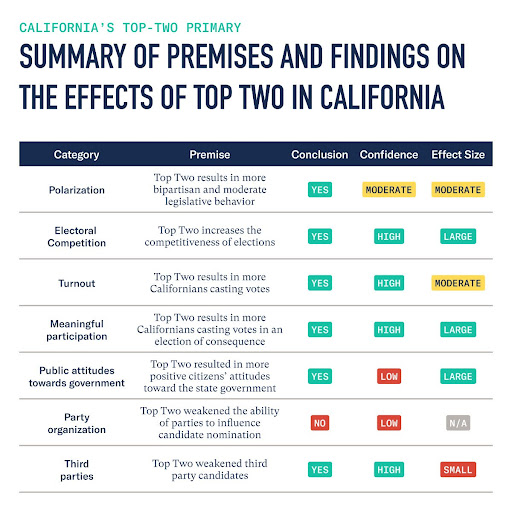
New report shows that Top Two nonpartisan primaries are improving California politics

A new report from the Unite America Institute tested multiple hypotheses about polarization, voter participation, and party power to analyze the effects of the top-two primary system since its implementation in 2012. The study found that California’s system increases the overall competitiveness of elections and voter turnout (as well as meaningful participation), two measures that point towards this system being more empowering to voters. Still, it also weakens third-party candidates, reinforcing the two-party system. With a top-two primary, all candidates are on the same ballot (with their party affiliation indicated) for the primary, and the top two candidates advance to the general election, ensuring a majority win. This system differs from the non-partisan elections proposed in HB369 in that the Georgia bill seeks to simply remove parties from the ballot, making it harder for voters to know what party they are supporting in local elections. In this way, we propose that HB369 does not have an empowering effect for voters, the way primaries in California do.
A Statement on HB 369 from the 9th District Republican Party

This is an official statement from the Georgia 9th District Republican Party calling on Governor Kemp to veto Georgia House Bill 369. This artifact reveals the contrast to the broader debate about the bill. This X post frames HB 369 as a threat to transparency and voter clarity by removing party labels from certain local races. California uses a nonpartisan and top-two primary system, which is correlated with higher voter engagement. This artifact unintentionally highlights how Georgia’s political structure may prioritize partisan advantage over voter accessibility. Critics claim HB 369 suppresses voter influence by changing elections to lower turnout primaries. This post claims that party identification is vital for voter understanding, which contrasts heavily with how nonpartisan systems can decrease polarization and promote broader voter choice.
DeKalb County district attorney warns of legal fight if HB 369 becomes law
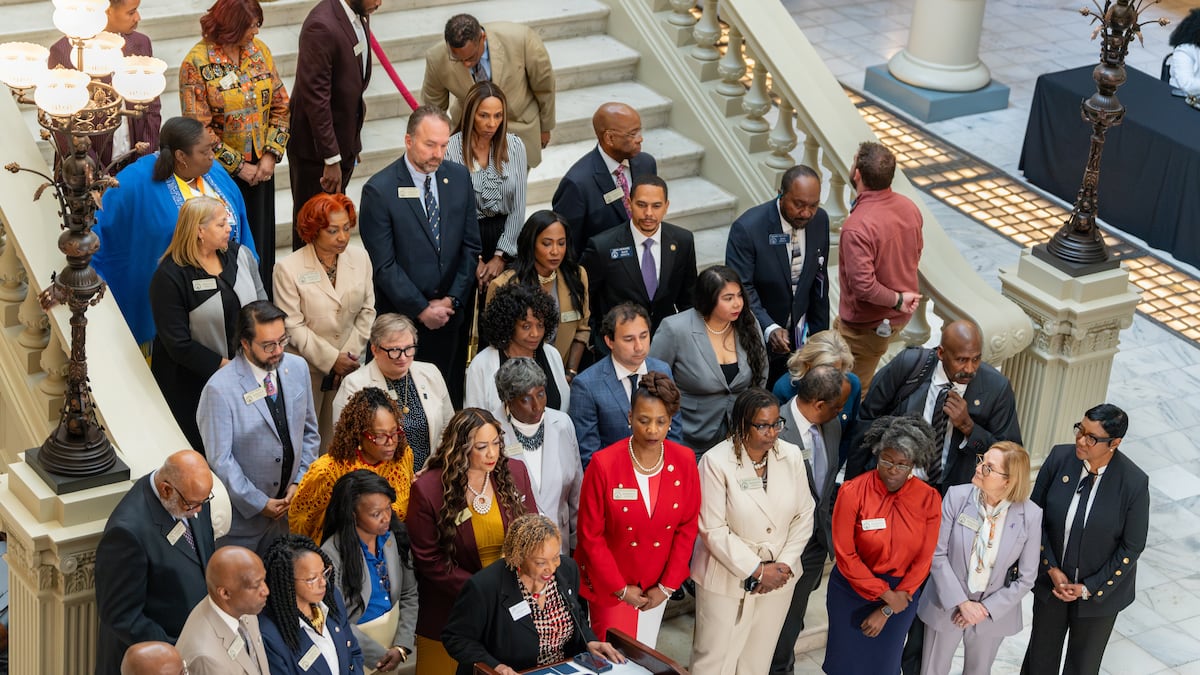
This Atlanta Journal-Constitution article is a strong artifact that reinforces the broader argument about Georgia House Bill 369 being more restrictive than other states’ systems, like California. According to the article, leaders of metro Atlanta have asked Governor Kemp to veto the bill, claming its discriminatory and creates unequal election rules by targeting only five heavily populated, largely Democratic counties rather than applying the election system statewide. The selective strategy proposed by HB 369 operates less as a neutral reform and more as a tool that reshapes political power in certain counties. California’s nonpartisan systems are applied statewide and are associated with wider voter participation. Georgia’s approach confuses voters by removing the party marker in certain counties. The article also mentions how the bill could complicate elections and make it harder for voters in certain counties to maintain true political representation. This links directly to the idea of voter suppression, with changing election formats and removing party identifiers in targeted areas.
Policy Brief: How the Voter’s Choice Act Changed Turnout in California

This article from the Public Policy Institute of California on the Voter’s Choice Act (VCA) explains how election reforms can shape voter participation, especially when compared to. The VCA expands access by mailing ballots to all voters and increasing accessibility through centralized vote centers to increase turnout among underrepresented groups. Georgia House Bill 369. The effects of VCA were unexpected, with turnout declining in certain counties during the 2022 midterms and dropping among certain groups especially with young voters and Latino voters, even though there were slight improvements in the general elections. This artifact is important because it shows that even in states like California, where reforms are typically aimed at growing voter access, VCA is criticized for potentially shifting voter influence. The PPIC article supports the idea that election reforms must be assessed not just by their structure but by how they are applied. California’s voting system shows it can bear mixed results. Georgia’s HB 369 seems to focus on restricting access rather than expanding, like California’s VCA.
The Real History: California’s Top-Two Nonpartisan Primary Electoral Reform

California’s top-two primary system was not a rushed or hidden political maneuver, but rather the result of a deliberate, years-long effort to reform elections in a way that reduces partisan control and broadens voter participation. By tracing its development, the document emphasizes how reformers carefully navigated legal constraints—especially after earlier open primary systems were struck down—by designing a model based on “party preference” rather than formal affiliation. At the same time, the document highlights the political resistance from major parties and the compromises required to get Proposition 14 on the ballot, suggesting that while the system was rooted in democratic ideals, its passage depended heavily on negotiation and timing. HB 369 faced similar scrutiny to proposition 14, but has its same roots when looking at it overall.
Why Reform Matters in California

The PPIC report argues that California’s electorate is fundamentally unrepresentative, with voters tending to be older, wealthier, and whiter than the broader population, while younger, lower-income, and minority groups are significantly underrepresented; this gap matters because it skews policy outcomes toward the preferences of those who actually vote rather than the full public. In contrast, Georgia House Bill 369 reflects a different kind of electoral concern—not participation gaps, but the structure of elections themselves—by proposing nonpartisan elections for certain local offices in major metro counties, which supporters claim could reduce political polarization while critics argue it may confuse voters or reshape political power in targeted areas. While the California analysis highlights how inequality in turnout produces an “exclusive electorate,” the Georgia policy debate centers on whether changing ballot structure (removing party labels) improves or undermines democratic representation. Together, they illustrate two distinct challenges in U.S. elections: one rooted in participation , and the other in how elections work overall, both of which ultimately shape how representative democratic outcomes actually are.
A New Look at the Republican Advantage in Nonpartisan Elections
JSTOR shows how the republican party had the upper hand in the bicamerial voting system established in both California and Georgia. According to the document, republicans consistently meander the system to further push their own bills, creating a unfair system.
Nonpartisan shift in the state’s most populous and most liberal region

This post by Atlanta Journal Constitution reporter Greg Bluestein on Bluesky is drawing attention to the use of this change in voting as a method to undermine Attorney Generals for prosecuting Republican officials and there approach of restorative justice. By making the voting process in their region, more confusing and difficult to navigate reducing the power of regions favorable to them retaining their position. They also point out that this bill that is widely agreed to be unconstitutional and will result in thousands of dollars in legal fees in court, at a time where funds for addressing the affordability crisis are scarce.
A Call to Action to Veto 369

DeeJay Chandler, like many other voter activists in Georgia, are drawing attention to House Bill 369 for its narrow application of non-partisan election. Although she does not bring up other examples such as the voting systems in California, she does make it abundantly clear in this post that this change, the what is called a non-partisan election in practice creates a two-tiered democracy where voters in these diverse, Democrat districts are given much more limited information on their ballot than other voters in Georgia. Though it’s not mentioned in this post, it is important to remember that these changes also remove primary voting opportunities in these districts, reducing the number of opportunities to make their vote count. Another way in which this voting change is quite unlike the voting changes we have seen in the California is that the changes to the voting system in California were done through popular approval of the voters in the region. This change has been widely acclaimed to be unconstitutional because of it’s lack of approval from the local voting bodies required Georgia’s Constitution. This post has a call to action in the second half asking for all listeners to call the Georgia Governor’s Office and gives a simple script for the particular issues addressed. Making a clear argument for widespread, informed voter action in order to maintain voting rights throughout the Georgia districts.
These two voting systems may at first seem to be attempting to reducing partisan influence on voting and increasing voter power but on closer inspection only one was built for that reason. One, a broad voter base and the other a one-partisan dominated political institution. As evidenced by academic institutions, attorney generals, and local news agencies, these voting systems are designed serve the groups that enacted them. In California an acted system that forces politicians to compete for the approval of the voters and in Georgia a system made by partisan politicians that obscures important information meant to be available to their voter base.
This reduced voter power, and thus reduced politician accountability, can also be seen in its ripple effects and in those that are protesting unpopular bills affecting the lives of everyday Georgians discussed here.
Leave a Reply