
Georgia’s Legislation: Protecting Community-Based Peer Programs for Substance Abuse

As mental health and substance recovery has been a trending topic in Georgia legislation this session, House Bill 657 has been introduced and passed by Leesa Hagan. This bill was proposed to provide the citizens with the standards for peer specialists in community organizations. In page 2 of the bill, it states that peer specialists in varying divisions must have lived with the corresponding addiction or mental condition. Page 3 mentions that peer specialists must be certified by the department of behavioral health and developmental disabilities themselves, be nonprofit, and provide nonclinical services. With these regulations, the house hopes to standardize the training for peer specialists.
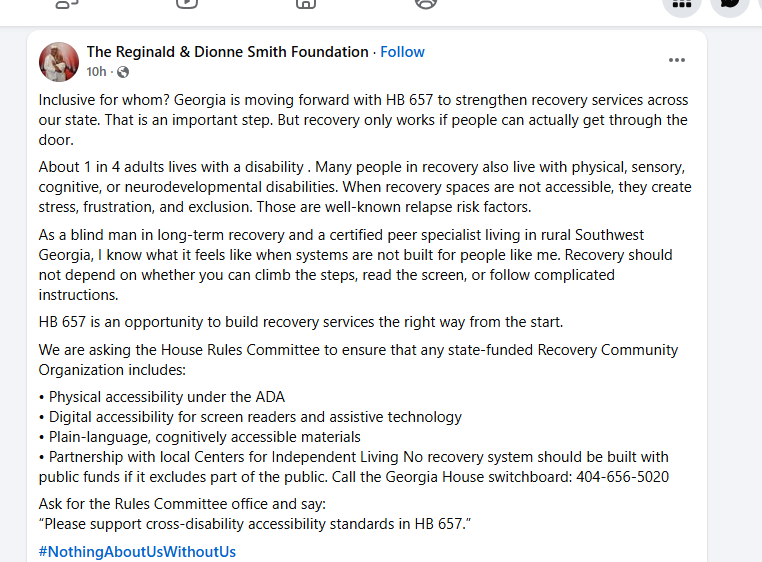
Reginald Smith, founder of the RDSF, a foundation for total wellness for families who are victims of substance abuse, argues that while the bill is significant step to recovery, it’s not accessible to everyone in need of the services. He asks the House Rules Committee to include accessibility under the ADA, screen accessibility, and partnership with Independent Living.
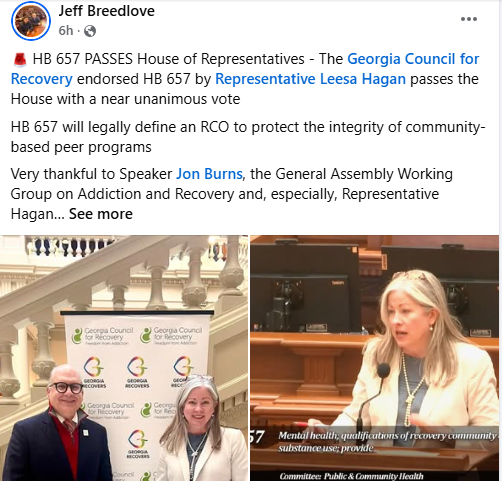
Jeff Breedlove, CEO of the American Addiction Recovery Association announces HB 657 being passed with a nearly unanimous vote. This bill legally defines the integrity of peer-based programs. Breedlove can expect this to be a significant push for the AARA.
The Georgia Council for Recovery endorses HB 657, passed by Leesa Hagan to define an RCO to protect integrity of community peer programs.
Leave a Reply