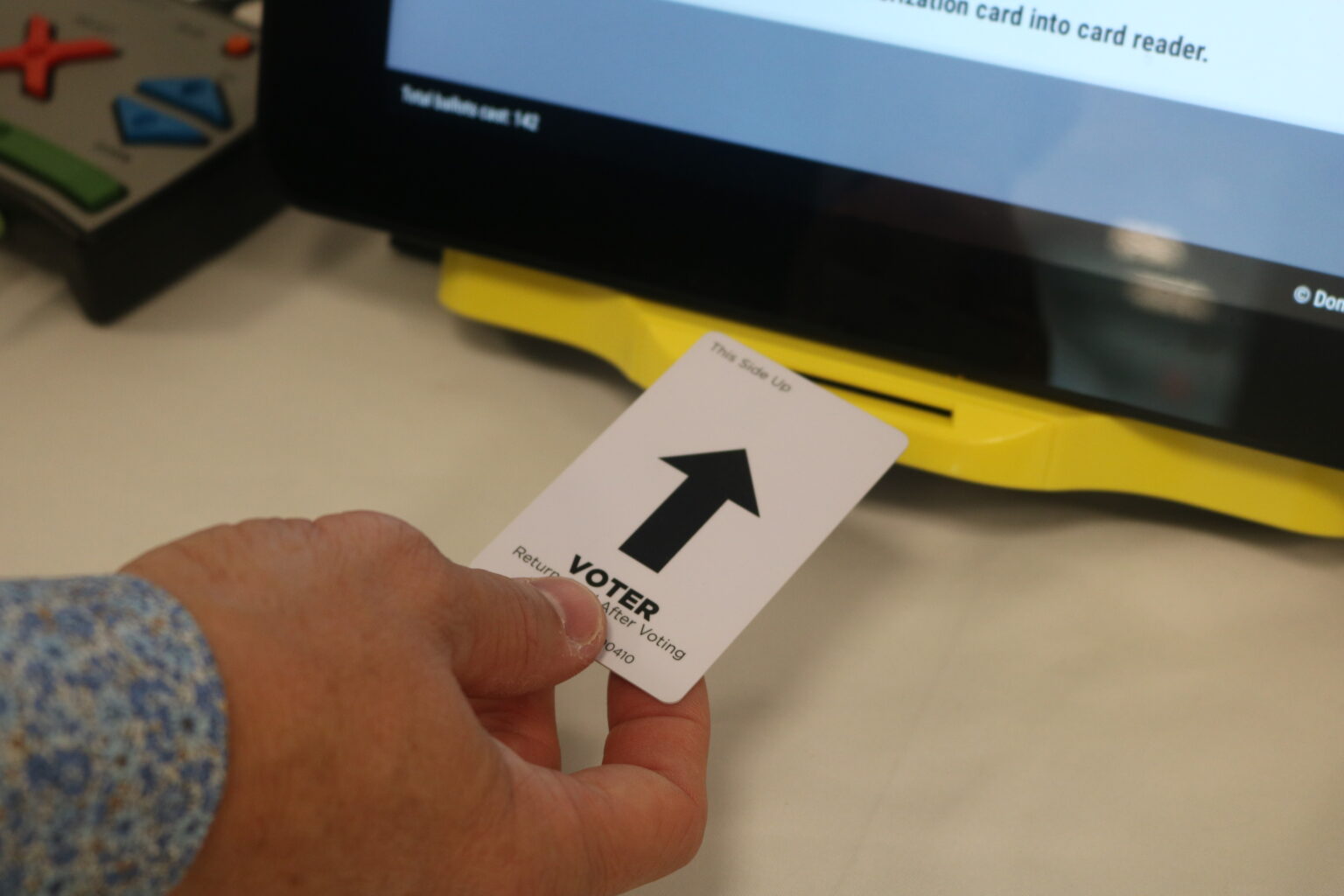
CA2 Post Team 2- GA Voter Ballots

Photo provided by: Maya Homan
Team 2:
Ken C, Jay E, Paige M, Emma H
Vote! Vote! Vote! This seems to be the war cry of many organizations and politically invested Georgians. The 2026 midterms will be a hot-button topic for more than one reason. For one, the midterm elections have the potential to serve as a turning point for this federal administration. Republicans hold a slim majority in both the House of Representatives and the Senate. This, paired with the political leanings of the executive branch, places significant political manipulability into the hands of the Republican Party. Additionally, with issues such as affordability, international conflict, and social justice being relevant especially now, a vocal affair is sure to be expected come November. So why are people worried now?
An executive order made by President Donald Trump prohibits the use of QR code scanning machines with regards to the tabulation of ballots. Machines which used this technology were used in many states in the 2020 elections- the same elections that President Trump claimed were stolen. Many feel that the timing of this decision is no coincidence. In January of this year, ballots and other documents from the 2020 election were seized from Fulton County by the FBI. Pressure to switch the voting systems is coming from within the state as well, as the deadline draws near for a law passed by Georgia Legislators in 2024 allowing the state to delay a decision on paper ballots until 2026. This legislative session, eyes have been on state congressional officials to see how they will proceed. One attempted resolution was SB214, which extended the deadline for changes to ballot collection methods until 2027, provided paper ballots as a legally accepted alternative to QR code ballots, and appointed a committee to decide on a new system for voting. This bill prompted some controversy, as voting bills often do, with many citing concerns over security of current voting methods, especially as the bill only delays the deadline for a decision regarding ballot format. Ultimately, SB214 failed to make it past Sine Die, leaving a gap in election legislation.
Georgia Senate votes for rapid move to hand-marked paper ballots before elections this fall
In an article on WABE, Georgia Journalist Mark Niesse reports on the discourse surrounding Georgia’s voting system and voter ballots. State Capitol representatives have discussed conflicting viewpoints on multiple related bills, such as SB 214 and HB 960. Republicans have argued that the state’s electronic voting system is not longer trustworthy and claims that the state needs to switch to hand-marked ballots to follow the majority of other states’ voting systems. Democrats argue that the current electronic ballots are to be considered more accurate over hand-marked paper ballots, and claim that upcoming topics of potential voter fraud have yet to be proved before effectively considering changing the format for voter ballots. Undercutting the partisan division present in opinion is the harsh reality of midterm elections in November. As Joseph Kirk, the president of the Georgia Association of Voter Registration and Election Officials points out, any overhauls to the election system so close to the midterm elections is “irresponsible and unrealistic”. Kirk cites constraints like testing, training, and implementation. Expected voter turnout for the 2026 midterms is shaping up to be quite high. Introducing a new system with untrained staff is a logistical nightmare waiting to happen.
In this tweet, election activist David Cross shares his opinions on Senate Bill 214. His tweet includes a video from the committee discussion on the bill. Cross’s concerns lie in the need for a patch that the Dominion Voting System requires in order to continue secure operations. When questioned by Representative Jasmine Clark (Dem, 108th), Representative Victor Anderson (Rep, 10th) explains that the patch needed for the Dominion Voting System is not included in the bill. Installing the patch would require a complete overhaul of the OS for the Dominion Voting System and the tabulation machines. As Representative Anderson states, these measures would take money from a budget that is already quite narrow. There will be no new systems until they receive the budget to do so. However, as David Cross points out in his tweet, SB214 pushes back the deadline for a decision to be made on voting methods to, at the earliest, 2027. This leaves a massive gap in legislation, especially with midterm elections approaching in November. While delaying the decision may be strategic, it does little to ease the concerns of constituents on voting security. This bill takes a careful directive regarding voting methods, as it refuses to make a final call on the method of ballot counting, instead opting to create space for further discussion. This legal ambiguity may spell trouble for the state given the new federal guidelines regarding voting.
This Tweet is in regards to the topic of potential voting count issues in Fulton County, Georgia from the 2020 election, mainly focusing on the aspects of the ballot recount in December 2020 that highlights potential irregularities. As twitter user Harry MacDougald points out, the recount yielded 511,343 votes cast, which is the number that was sent in with the Batches Loaded Report on December 3rd. This number reveals a discrepancy, as the 511,343 is short by 17,434 ballots from the original count. Twitter account Mad Liberals claims that these ballots were added from BMD Tabulator 816 due to an organizational error. All 511,343 votes can be accounted for, with scans and date and time stamps being available. The 17,434 ballots do not contain this data. The recent involvement of the FBI in Fulton county has brought this issue to the surface once more, as the ballots from the 2020 election were seized from Fulton County, GA. Due to these inconsistencies, many pro-voter reform individuals argue that the BMDs are too easy to manipulate. Though some legislators support postponing the decision for voting formats until after midterms, others argue that the security issues with the current system are glaring, and have the potential to yield an unfair midterm come November.
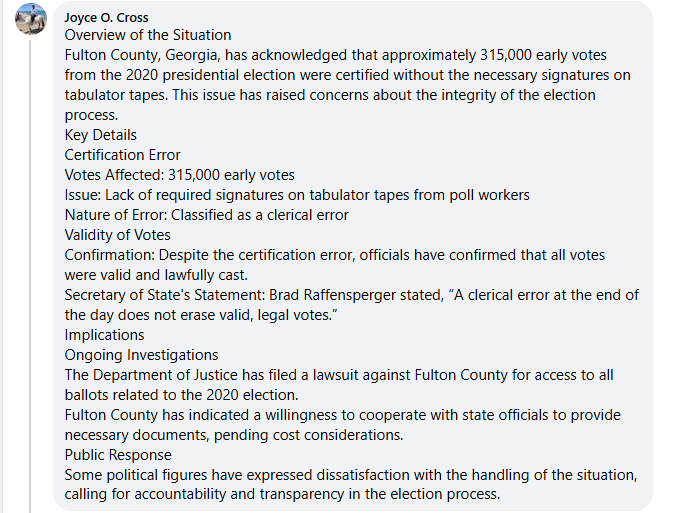
Right-leaning Facebook user (@ Joyce O. Cross) comments on an AJC article that notes Kemp’s decision about the future of the Georgia elections. Detailed in this comment is the information accessible to the public regarding the 2020 election since the FBI raid on Fulton County’s Election and Operation building in February. This comment also summarizes aspects of the argument made by those who doubt the accuracy of the 2020 election. According to Cross, over 315,000 early votes from the election were “certified without the necessary signatures on the tabulator tapes.” According to Raffenspurger, “A clerical error at the end of the day does not erase valid, legal votes,” however, many question if these votes should be considered valid due to the clerical error. Many right-leaning individuals argue that the acceptance of these unsigned ballots reveals issues with the current voting systems, mainly, the potential for these systems to be manipulated. Democrats within Fulton County argue that the ballots that were counted for all were in line with fair election standards. Additionally the legality of the ballot seizure has been questioned. The FBI claims that this seizure was due to “interviews with conservative activists” according to NBC News. The discrepancies with the ballots from this election in Fulton County has been a big topic in Georgia. Many Georgians lack faith in the BMDs used for Georgia elections. Attempts to address this distrust have been present in the last few years, but have been largely unsuccessful due to disagreements on what the best system is. This has led to bills such as Senate Bill 214 that seek election reform.
Twitter user Jeff Fulgham tweets regarding a discussion he had with Governor of Georgia Brian Kemp and the Georgia Bureau of Investigation (GBI). In this letter, outlined is what Fulgham refers to as ‘detailed evidence’ of 2020 voter fraud. Fulgham’s statements echo opinions commonly held by those who believe that the 2020 election was stolen. He claims that the Dominion Voting System is at fault for the fraudulent proceedings of the election, and that the Risk Limiting Audit, performed using ARLO by VotingWorks was manipulated, with duplicate batches being added to the Fulton hand count that was performed. ARLO is an open source software that has both free and paid versions of their product. The tech is used to run audits on ballot accuracy. In the state of Georgia, batches of ballots are randomly selected, then hand-counted. Then, using ARLO, the ballots are checked to ensure that the hand-counted numbers match with those digitally recorded. According to VotingWorks, ARLO was used in the 2020 election to audit “all 5 million ballots”. The results came back well within the acceptable margin of error of 5%, a limit set to account for human error when counting votes. Despite this, Fulgham proposes a 100% hand count following the machine count in order to “mitigate machine errors and fraud” if digital ballot marking is to be continued. Secretary of State Brad Raffensperger remarked following the most recent electoral audit performed, “Georgia’s election systems are our nation’s best”. But faith in Raffensperger and the Georgia voting system continues to dwindle. This post reflects a commonly held attitude among those aligned with right-wing politics of distrust towards how our votes are collected and counted. Ultimately, this distrust, combined with mounting pressure from the current federal executive administration, is creating a rift between constituents and politicians– one that state officials can not agree on how to fill with further legislation.
In a post made by twitter user Garland Favorito (VoterGA), Favorito gives a brief synopsis of the controversies surrounding the 2020 election and the legislation which has sprung up as a response. According to Favorito, the Georgia House altered SB214 to push back the decision to switch from QR coded ballots generated by BMD (Ballot Marking Devices) to an alternative voting method until 2028. The BMDs used by the State of Georgia, the Dominion Democracy Suite 5.5 voting system uses QR codes on ballots. These QR codes are then scanned and tabulated for the purpose of result collection. This collection method has inspired controversy
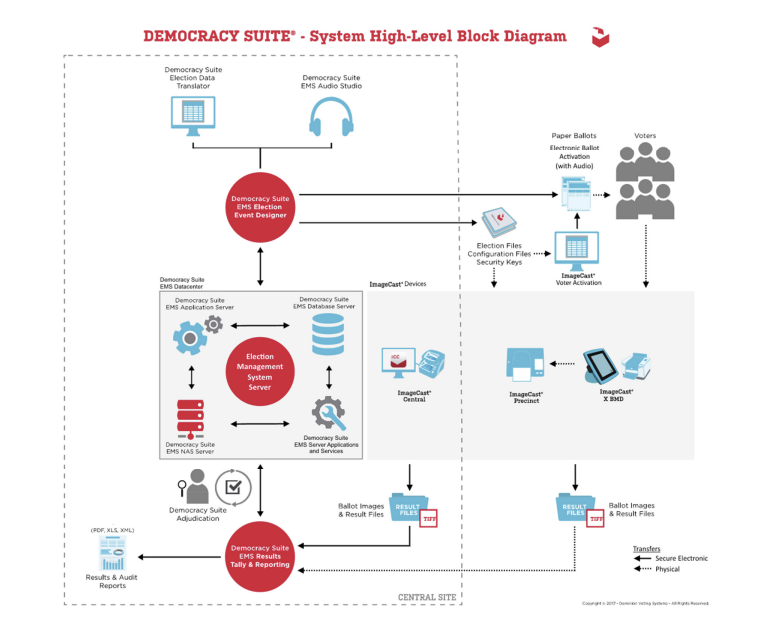
regarding the accuracy of the count. In 2020, the system was found to be in violation of two GA statutes requiring “voter verifiability and human readable text”. As a response to these controversies, SB214 authorizes the purchase of new BOD (Ballot on Demand) voting systems. These systems work by printing out a certain number of ballots depending on certain metrics that can include expected voter turnout. Criticism has been raised regarding the security of these options. According to this tweet, the voting systems SB214 authorizes are foreign made, can be accessed remotely, and do not comply with national guidelines surrounding critical infrastructure. As Garland Favorito states, “The Secretary of State failed at his job. Then, SB214 was transformed from a voter bill to a vendor bill.”
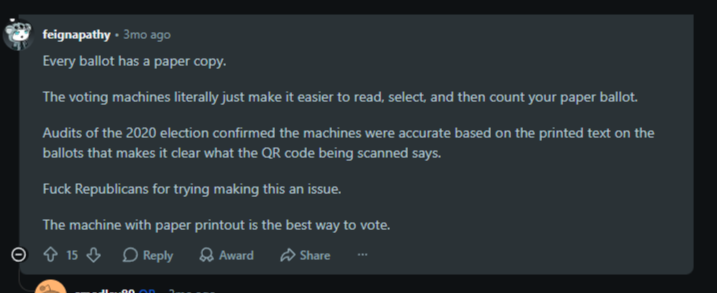
A Georgia resident (u/feignapathy) on the r/Atlanta Subreddit shares concerns and outrage over a press statement made by the Georgia Republican Party that argues that paper ballots are essential to providing a fair election process for everyone involved. The commenter and many other Georgians under this post find this new approach to voting pointless. This user notes the methods in which ballots are currently marked and tabulated. Each electronic ballot comes with a paper copy that double secures someone’s vote. As feignapathy says, “The voting machines literally just make it easier to read, select, then count your paper ballot.” Since the raids on Fulton County’s 2020 election, many feel that there is a deeper reason for the focus on the election methods, finding the push to take QR codes off the ballot to be useless in moving the state towards trustworthy systems of elections and voter rights. Supporters of the current BMDs (Ballot Marking Devices) attribute the advocacy for the complete removal of electronic voting systems as being a ploy to control elections in the state.
The Twitter account WhatmattersinGeorgia is a community page where stakeholders share updates on state policies such as bills like Senate Bill 214. This post shares that the House voted yes to fixing Senate Bill 214 in conference. Tim Fleming, who is known for his sponsorship of House Bill 397 regarding election reform, voted no on Senate Bill 214. House Bill 397 focuses on election administration and governance while Senate Bill 214 focuses on voting methods and the ballot systems. The reason Fleming’s vote seems so shocking is the connection between these two bills as they both are part of a larger legislative push to modify election procedures. This post highlights that Fleming voting no is due to the bill’s time frame delays and the concern of the state having to purchase a new system.
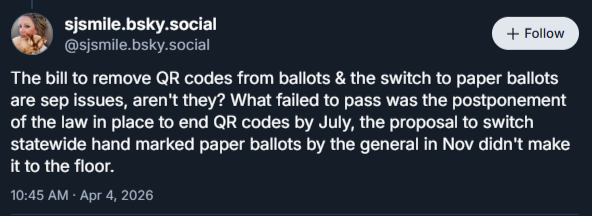
Bluesky user (@sjsmile.bsky.social) comments on a news article by the Democracy Docket. The article details SB 214 being unpassed by the final day of the legislative session for 2026. This user mentions that the QR codes within Georgia’s voting system being changed before the midterm elections that will not only change federal positions but in state positions that could flip key chairs to blue. A common argument made by the democrat side of the aisle is that the QR codes protects voter ID. Since the FBI raids on Fulton County’s electronic ballots earlier this year, many worry that paper ballots will ultimately harm the reputation and confidence of Georgia voters.
AJC chief politics writer Greg Bluestein tweets sharing his survey of the situation after Sine Die on April 3rd. According to Bluestein, after failing to pass legislation regarding voter reform, the Georgia Assembly may be called back into a special session due to a “legal limbo” caused by voter laws. The special session would allow state lawmakers to make final decisions on bills related to this topic. The special session would also allow lawmakers to make a final call on Georgia’s voting system, and whether to keep electronic ballots or switch to hand-marked paper ballots. Some of the related bills did not make it to the Sine Die date, leaving a vagueness on how to proceed. Leaving these decisions unfinished could lead to legal issues down the road, especially with executive orders prohibiting use of BMDs. As Representative Anderson warned Bluestein, if a decision is not made, final say may go to the courts. If this issue escalates to the courtroom, this could have a huge impact on Georgia’s midterm elections.
Academic Article Quote: https://journals.sagepub.com/doi/pdf/10.1089/elj.2023.0030
“Due to restrictions on the use of electronics within Georgia polling locations, teams manually timed voting steps using pen, paper, and stopwatches. Collectors began tracking a process when a voter occupied the space at the station and ended tracking when the voter exited the station such that the station was available to other voters” (81).
In the 2026 session, voting reform was a big topic of conversation, especially as the ongoing FBI investigation regarding the 2020 election ballots in Fulton County began ramping up. Alongside topics of past and upcoming elections, multiple bills have been introduced in the Georgia Assembly that are looking into Georgia’s voter system with the aim to either get rid of QR codes on voter ballots, or transitioning away from electronic ballots altogether. These same bills were also expected to serve as a way to beat both the Sine Die and the 2024 election law deadlines.
The rising tension circulating state lawmakers in the just recent session has not given way, even after Sine Die Day had passed at the beginning of this month. Current bills, both passed and have not passed, have been discussed with consistently conflicting opinions from both lawmakers and stakeholders. Arguments from both sides seem to share similar ideas but with opposing reasonings, with a recurring theme shown to highlight the opposition’s argument with the claim as to why that argument does not work for the current issue at hand. Georgia representatives, regardless of party affiliation, have shown concern in regards to some bills that did not come to a decision, and are expecting to be called back into a special session, preventing legal issues from arising later on, especially with the mid-term elections nearing.