HB 369 & Non-Partisan Elections

The following article focuses on HB 369, sponsored by John Albers in the Georgia Senate and Dexter Sharper in the House, among others. The bill currently proposes making county elections nonpartisan in five metro Atlanta counties, starting in January of 2028. This means removing the party label next to the candidates’ names on the ballot. The five counties targeted by the bill are Clayton, Cobb, DeKalb, Fulton, and Gwinnett. HB 369 has passed the legislature and is awaiting Governor Kemp’s signature. Also important to notice is that HB 369 was originally introduced in the House as a food truck regulation bill, concerned with amending safety standards for this type of motor vehicle. The text was amended in the Senate to remove all legislation related to the original bill and was rewritten into the current bill dealing with county elections.
The revision and passing of this bill have raised concerns among voters and politicians alike, focusing on the partisan nature of the bill as an attempt by Republicans to gain more votes in the affected counties. The five counties mentioned are highly populated, urban areas, which tend to lean more democratic in most elections. Offices in these counties are also all currently held by black democratic women, raising concerns about a possible racist or sexist motive for passing the bill. Republicans have stated that the bill aims to remove bipartisan politics from local elections, but critics rebut that, in that case, the bill should apply to all counties in the state, not five highly populated, democratic ones. In the following sections, we look at news articles and stakeholders’ conversations in social media regarding this bill, as well as literature on changes in voting laws regarding parties and the outcomes of voting and representation, to make a prediction on how this bill, if passed, could affect elections in these counties.
AJC :Metro Atlanta leaders urge Kemp to veto bill to make some offices nonpartisan
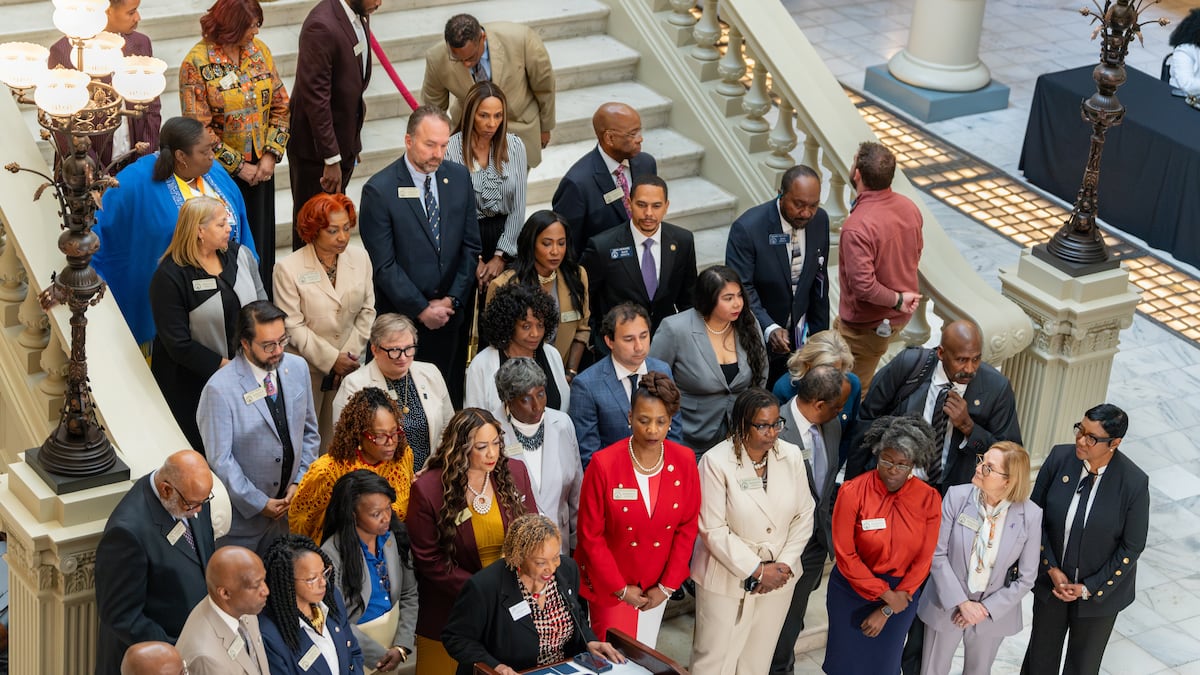
This AJC article by Caleb Groves gives a brief introduction of how democrats responded to HB 369 after it passed the legislature. Officials are advocating for the governor to veto the bill, calling it unconstitutional and discriminatory. The bill would also make it easier for republicans to gain more influence in democratic areas of the state. In Groves’ words, democrats believe the bill “would also prevent high-profile prosecutors like Fulton District Attorney Fani Willis, a target of Republicans over her failed prosecution of President Donald Trump, from coming to power.” Democrats see this bill not as an attempt to remove politics from elections, but as a move to gain more control in some of the most democratic areas of the state.
Metro Atlanta DAs slam Georgia bill removing party labels as “unconstitutional” and targeted
This CBS News article by the CBS Atlanta Digital Team includes some of the comments made by officials about HB 369 and the grievances expressed. Fulton County District Attorney Fani Willis has been one of the most outspoken officials to reject the bill, stating that “The targeting of five African-American women Democrats… is racist, sexist and clearly unconstitutional.” This contributes to the issue mentioned earlier, that the bill disproportionately targets black democratic candidates. Gwinnett County District Attorney Patsy Austin-Gatson expressed similar concerns, adding that the bill is an attack on voters’ choice and transparency, and that everyone should be able to know what party the candidate they are voting for is a part of. Leaders in Clayton County expressed their opposition in a letter to House Speaker Jon Burns, and DeKalb County District Attorney Sherry Boston talked about taking legal actions
Voting Rights in Georgia: A Short History.
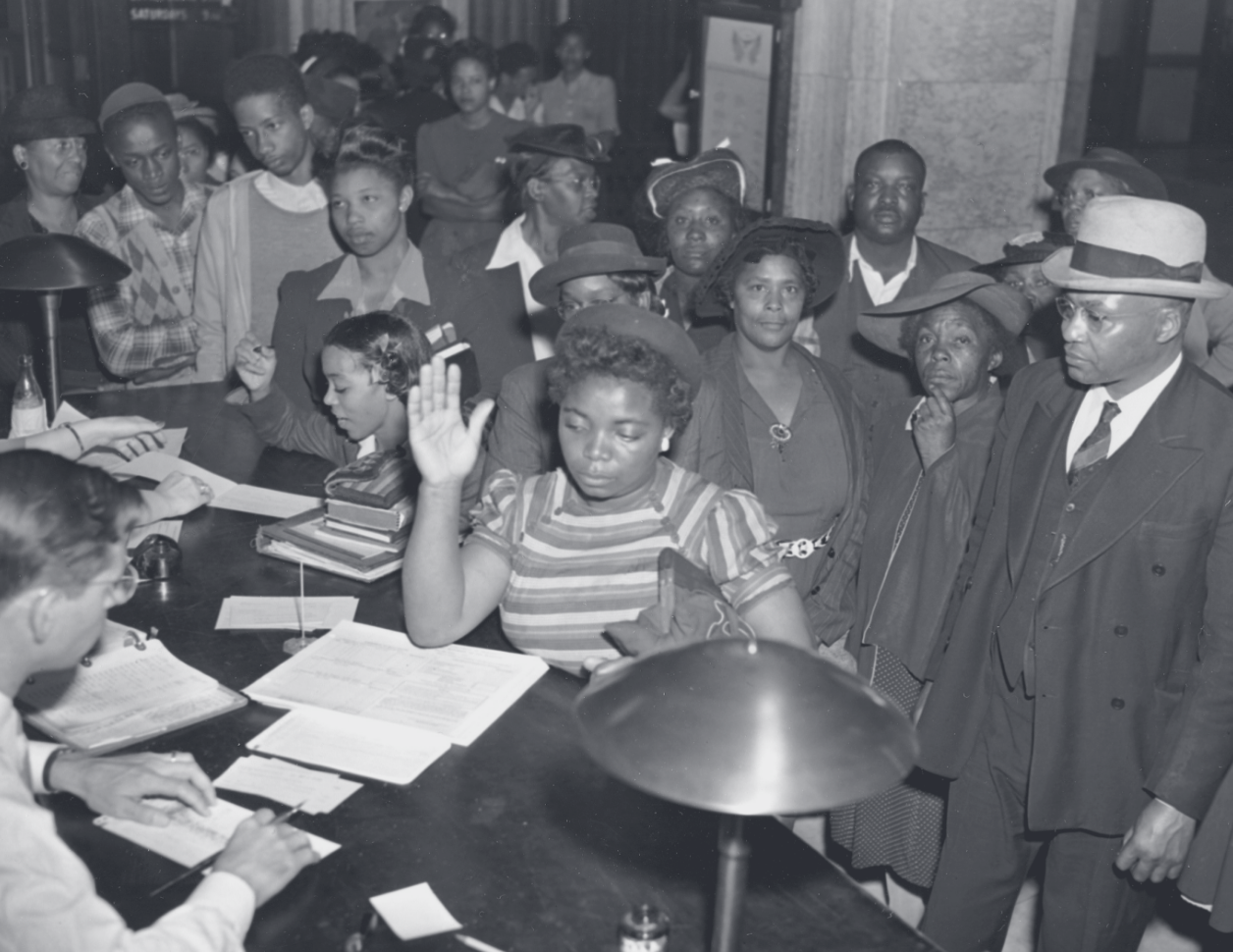
This academic source, Voting Rights in Georgia: A Short History, helps clarify the context behind the Republican push for Georgia HB 369 by explaining how voting laws in this state have historically been shaped by actions aimed at controlling political power. The source explains specific policies have often been used to restrict the influence of Black voters, with literacy tests, white primaries, and more recent tactics like redistricting and voter roll purges. It also stresses how, after the 2013 removal of federal preclearance, Georgia passed new voting measures creating stricter registration rules and polling place reductions that disproportionately affected minority communities. This historical pattern correlates directly to HB 369, as Republican lawmakers have framed this legislation as essential for election security, similar to how past policies were justified. However, critics argue that these types of laws can continue the long standing trend of restricting access to voting, all while Georgia’s population becomes more diverse and politically competitive by the day. HB 369 is part of a broader historical cycle, with this source suggesting these changes to voting laws are closely linked to shifts in political power and demographic change in the state.
A New Look at the Republican Advantage in Nonpartisan Elections)

This academic source, A New Look at the Republican Advantage in Nonpartisan Elections, gives an essential context for understanding the Republican push for Georgia HB 369, specifically its effort to remove party labels from particular local elections This study finds that these systems tend to advantage the minority party because voters lose the simple cue of party labels and may vote differently than they would in partisan elections. This is significant in Georgia, where many of the counties targeted by HB 369, especially in metro Atlanta, lean Democratic. By making these elections nonpartisan, Republican lawmakers are creating conditions where Democratic candidates, as the majority party in those areas, lose their usual advantage tied to the party label. This journal article explains that without party labels, voters lean on weaker cues, which can lead to more unpredictable voting behavior and benefit whichever party is in the minority. In the context of this article, HB369 is exposed as a strategic change by Republican lawmakers that will reshape electoral results. HB 369 can shift power by weakening dominant parties, which aligns with broader Republican efforts to stay competitive in increasingly Democratic parts of Georgia.
State Preemption: Threat to Democracy, Essential Regulation, and Public Health

This academic journal article on state preemption helps illustrate the broader political context behind the Republican push for Georgia HB 369 by underlining how state governments can restrict local control in ways that shape political results. Preemption is when a higher level of government limits the power of local governments, often justified as a way to develop uniform policies across a state. This source claims that this justification is usually misleading, as preemption can actually undermine democracy by discouraging local communities from making decisions that reflect their own needs. This correlates directly to HB 369, which would set state level rules, like removing party labels from ballots, in specific local jurisdictions, with many having different political leanings than the state government. According to the article, these types of policies can reduce local voter leverage and divert power away from communities, especially when those communities are more diverse. HB 369 can be viewed as part of a broader trend where state governments use preemption as a political tool that can reshape elections and limit local government authority.
Ideology and Vote Choice in U.S. Mayoral Elections : Evidence from Facebook Survey
This analysis by Michael W. Sances answers the question in the gap of data in city wide elections, and uses data from social media such as facebook to assert their claim. Questions such as how exactly urbanization affects the voting process and how local political conflict affects overall voting quality. Using facebook creates logical data locally due to facebook’s long reach in the community throughout multiple age groups creating a solid census of data. This relates directly to HB 369, showing more specialized data on how voting laws affect voters of all ages, specifically of marginalized communities.
The Voting Wars: Public Opinion About Battles Over Voting Rules.
Understanding the impact of voting law change as well as the current situation of voting is pivotal. Ryan Classen and Michael Ensley create the groundwork on the “voter myth” and uses statistics and data charts to show the effect of the voter myth. They claim that Republican voter laws create restrictions, and that the reason they do this is to stop voting fraud. Using data, they claim that the voting fraud that the Republican party claims isn’t as real as it seems. On the contrary, there is a claim on how Democratic party also has a own voter myth of themselves, creating a multi face image on the current state of voters rights. Protecting the integrity of American elections will require finding common cause among partisans with very different beliefs and motivations.
Candidate Choice Without Party Labels
This analysis research by Patricia Kirkland and Alexandar Coppock makes the claim that a unified voting reform is necessary to bring stability and safety to the voting system. The analysis explains that debates over election integrity in the U.S. are highly partisan, with each political side motivated by different concerns. For example, some focus on increasing voter participation, while others emphasize preventing fraud. These differences come from distinct beliefs about how elections are won and what threats matter most. HB 369 is rooted on the effects of voting reform, which makes this a direct extension of reactions to HB 369.
Ranked Choice Voting: The New Norm Across the Bay Area
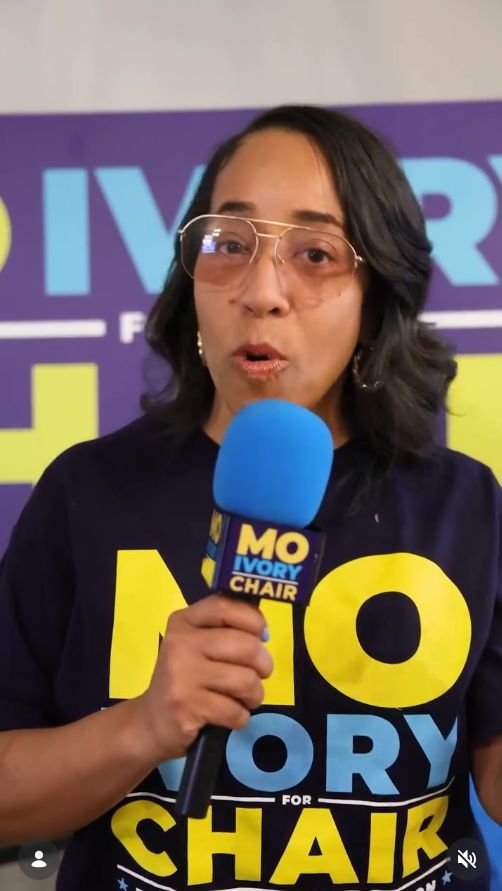
In this Instagram post, Fulton County’s District 4 Commissioner, Mo Ivory, is pointing out that these election changes caused by HB 369 are only occurring in those districts with large left wing black voter population. It reduces voter power in those regions so that the Republican officials can gain an unfair advantage as she said ” If this were about fairness, it would apply everywhere.” If this bill truly was written in a spirit of fairness, then why do only these regions deserve a more fair election? While she urges her audience to email and call Brian Kemp to use his veto power, it is also quite possible that this bill will be stopped in court as it has not gone through the electoral approval normally required for changes to elections.
Have You Heard About HB 369
Supporters of this bill claim this improves choice, freedom, or fairness of elections. So, it might be worth looking into how other communities have approached this issue. In a paper by Nancy Lavin in the National Civic Review discusses one such voter reform that was met with 72% voter approval in the San Francisco Bay area. This so-called ranked choice voting seeks to increase voter power and election fairness by allowing voters to rank their preferred candidates avoiding the problem of voters feeling like they waste their vote on unlikely candidates. This change also addressed the issue of splitting the vote or the problem when a party forwarding multiple candidates would have their votes split between the two of them, therefore allowing an opponent party with only one candidate to win. There was also the unexpected benefit of reduced polarization and smear campaigns, it became much less productive to focus on the downsides of a particular candidate, when there were many more choices for voters to choose from, and an aspiring officials had a much better chance discussing the merits of their own plans, rather than the flaws of opponents.
This former food truck legislation paints a worrying picture for the five metro Atlanta counties effected and for Georgia voters as a whole. Especially when taken together with historic cycles of voter disenfranchisement, voting changes only applying to prominently black democrat regions, removal of party labels on ballots use as a tool shield un-popular parties and discourages local communities from self determination. In a country built on the institution of democracy, it is imperative that every citizen has a vote and every citizen’s vote counts equally. This bill is one in a long line of bills in the United States intended to suppress voters, despite those who spend their lives trying to make a more equitable democracy. And like those we have seen in the past, the function of this bill is to supplant the will of the people and replace it with the will of the dominant party.
Leave a Reply