

Blog

  • Can You Afford to Become a Teacher?

    Image Courtesy of Doug Butchy via Flickr and Creative Commons

    For many English majors considering a career in education, the biggest question is no longer “Do I want to teach?” but “Can I afford to?” Teaching remains one of the most meaningful professions despite its challenges. The profession exists within a labor market shaped by inflation, teacher shortages, and shifting state investments. While recent budgets and salary increases suggest education is becoming a greater priority, financial stability still varies depending on where educators teach and which educational setting they enter. Looking at Georgia’s recent investments alongside national salary data reveals that teaching offers long-term stability, but not every educator experiences that stability equally.

    Georgia has made significant investments in strengthening its education workforce. According to Arvin Johnson’s analysis of the state’s FY25 budget, Georgia allocated $13.2 billion to P–12 education and $3.4 billion to the University System of Georgia. Priorities included salary increases, expanded health insurance funding, retirement contributions, and workforce development initiatives. Policymakers also directed new resources toward teacher recruitment and retention, recognizing that compensation remains one of the profession’s greatest challenges. Johnson argues these investments improve educator quality and long-term workforce stability rather than simply increasing annual pay.

    Image courtesy of Bill Badzo via Flickr and Creative Commons

    Nationally, however, the picture is more complicated. The National Education Association’s Educator Pay in America 2025 reports that the average U.S. teacher salary reached $72,030, yet inflation has erased much of that progress, leaving teachers with roughly 5% less purchasing power than a decade ago. Although starting salaries have increased by 4.4%, nearly 70% of school districts still begin new teachers below $50,000, making financial security difficult during the early years of a teaching career. The report also highlights that teacher shortages continue to affect schools across the country, suggesting salary remains one of the profession’s biggest recruitment challenges.

    The financial outlook also depends on which educational path someone chooses. Evangelist and colleagues’ labor market analysis found that public K-8 teachers earned stronger wages and received better health insurance and retirement benefits than similarly educated early childhood educators working in private settings. Only 3.7% of college-educated private early educators met the study’s definition of a “good job,” compared with 50.9% of public K–8 teachers, illustrating that salary alone rarely tells the whole story. Benefits, retirement plans, and long-term job security often matter just as much as annual income when evaluating a career in education.

    Teaching may never become the highest-paying profession available to English graduates, but recent investments suggest that both Georgia and the nation recognize the importance of supporting educators more effectively. For future educators, deciding whether teaching is “worth it” ultimately becomes a balance between financial security, professional purpose, and the lasting impact they hope to make in students’ lives.

  • Artificial Intelligence: Modern Challenges of Teaching

    Artificial intelligence has quickly become one of the top largest changes facing education, and future teachers must decide how to respond to it. For English educators especially, AI raises difficult questions about writing, critical thinking, academic integrity, and the role of the teacher in the classroom. While some educators view AI as a threat to authentic learning, others see it as a tool that can improve instruction. Rather than asking whether AI belongs in education, many researchers argue that teachers must prepare students to use it ethically without sacrificing meaningful learning.

    Photo by Igor Omilaev on Unsplash

    UNESCO’s AI Competency Framework for Teachers argues that educators should no longer think of AI as simply another piece of classroom technology. Instead, teachers must develop new competencies that allow them to evaluate AI critically, understand its ethical implications, and determine when its use genuinely supports student learning. The framework emphasizes that teachers remain the center of the educational process because AI cannot replace professional judgment, empathy, or meaningful relationships with students. Instead, AI should support educators by reducing administrative work and expanding personalized learning while leaving instructional decisions in human hands.

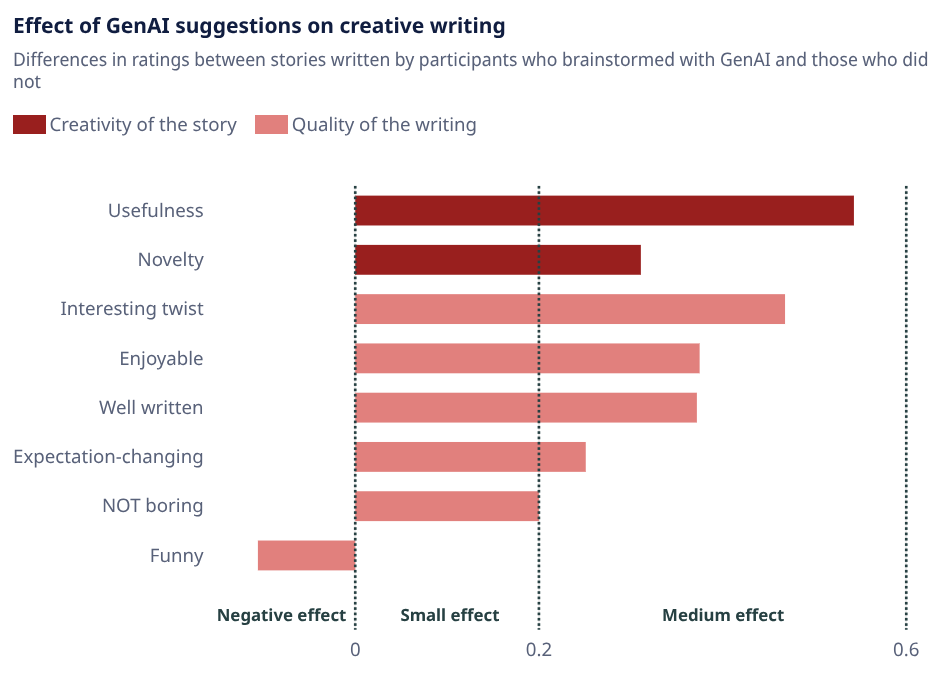
    The Organization for Economic Co-operation and Development (OECD) expands this discussion by asking what students should continue learning when powerful AI systems can already generate essays, solve problems, and answer questions within seconds. Rather than reducing the importance of education, the report argues that AI makes human skills even more valuable. Critical thinking, communication, creativity, ethical reasoning, and the ability to evaluate information become increasingly important because students must learn to question AI-generated responses rather than simply accept them. For English teachers, this shifts the focus from simply producing information to helping students analyze, interpret, and communicate ideas in thoughtful and original ways.

    Figure 1.7 by OECD Digital Education Outlook 2026

    The OECD’s Digital Education Outlook reaches a similar conclusion while focusing on classroom implementation. The report explains that successful AI integration depends on ongoing teacher training, clear ethical guidelines, and professional development rather than simply providing schools with new technology. Teachers must understand AI’s strengths and limitations so they can model responsible use while recognizing situations when traditional learning remains more effective.This pragmatic outlook has shifted the debate enormously. For future educators, AI is unlikely to replace the classroom, but it will continue changing how teaching and learning take place. The challenge is no longer deciding whether AI belongs in education, but using it to strengthen curiosity, creativity, critical thinking, and authentic learning.

  • Sources from my Interview

    Here are my sources:

    1. Writers and Authors, ONET Online. Writers and Authors, ONET Online, updated 2026.

    2. Rea Berg’s Book Blog, Gioia, Dana. Why Literature Matters, Rea Berg’s Book Blog, 2014.

    3. 20 Creative Writing Jobs for Graduates, Reedsy Editorial Team and Linnea Gradin. 20 Creative Writing Jobs for Graduates, Reedsy, 2021.

    4. How to Become a Writer: 7 Practical Steps, Reedsy Editorial Team and Linnea Gradin. How to Become a Writer: 7 Practical Steps, Reedsy, 2022.

    5. Writers and Authors, U.S. Bureau of Labor Statistics Team. Writers and Authors, Occupational Outlook Handbook, 2025.

    6. 10 Writing jobs you can do for a living, Jenkins, Jerry B. 10 Writing Jobs You Can Do for a Living, The Write Practice, 2019.

    7. Careers for Writers/People who love to write or edit, Nelson, Val and Sara Barry. Careers for Writers/People Who Love to Write or Edit, Val Nelson Career Transitions, 2022.

    8. Fantasy author John Wiswell explains the ‘Tetris method, Wiswell, John. Fantasy Author John Wiswell Explains the “Tetris Method” That Can Keep You Productive in 2025, Polygon, 2025.

    9. 10 Best writing careers you should consider, University of Our Lady of the Lake. 10 Best Writing Careers You Should Consider, OLLU Blog, 2024.

    10. The Four Seasons of Writing: How Authors Can Build a Burnout-Free Writing Routine, Weiland, K. M. Helping Writers Become Authors, Helping Writers Become Authors, 2026.

    11. A friend’s advice to cut my tortured prose unlocked my career as a novelist, Martin, Andrew. A Friend’s Advice to Cut My Tortured Prose Unlocked My Career as a Novelist, The Guardian, 2025.

    12. 8 Tips for Pulling Off a Career Change From a Bestselling Author, Fortune, Carley. 8 Tips for Pulling Off a Career Change From a Bestselling Author, The Wall Street Journal, 2025.

    13. Vanity Fair Article on Jake Tapper; Novelist, Tapper, Jake. “Oh, Look, That Monkey Can Ride a Bike”: Jake Tapper Knows What You Think About His Second Career as a Novelist, Vanity Fair, 2023.

  • Review Activity

    This is for Skylar, and Tyler.